
The softwareyou run on.
Scheduling, inventory, proposals, billing, portals, reporting and the app your team uses away from a desk. Built to the way your business already works, not the other way round.
A company has run on this every working day for a year.
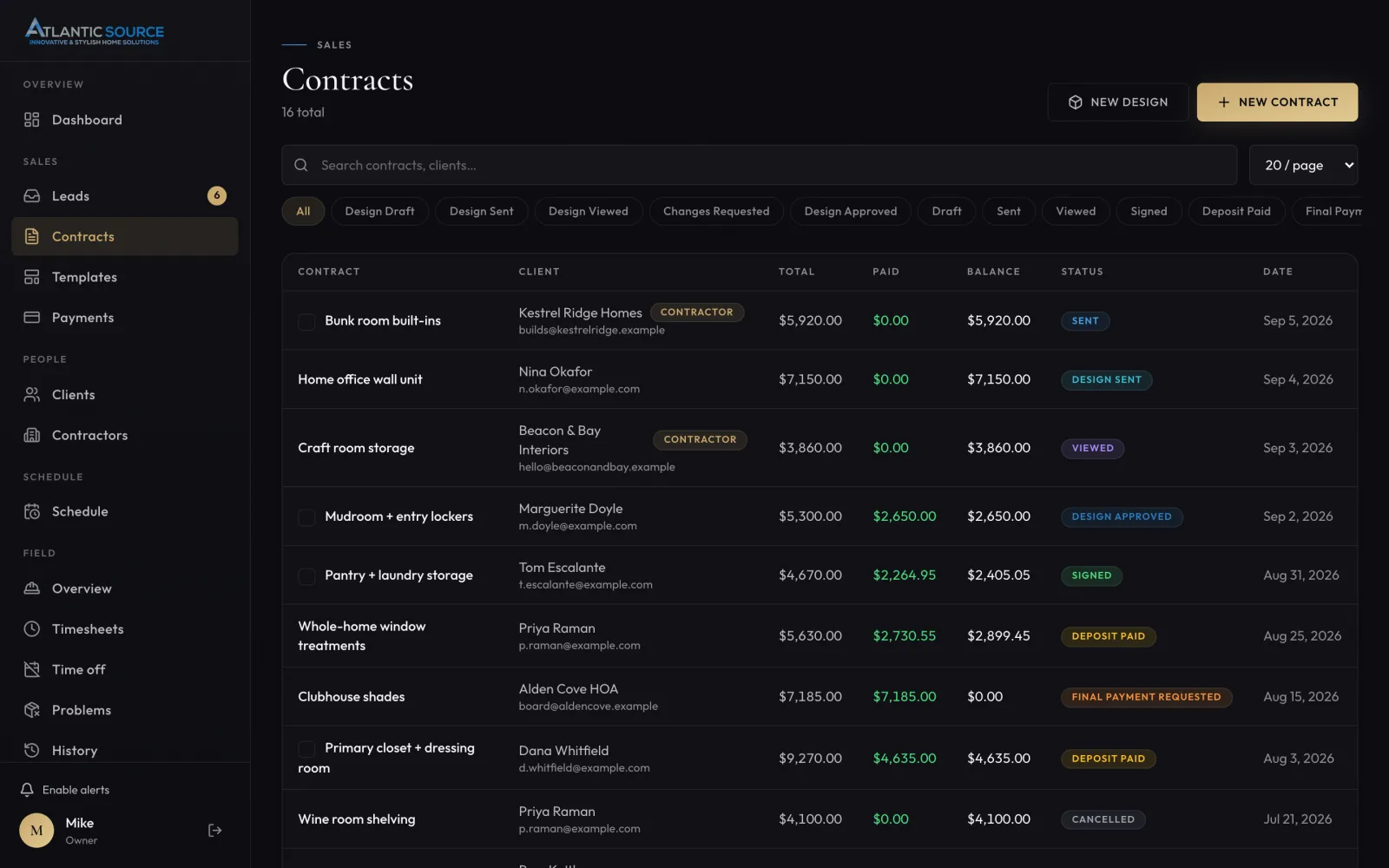
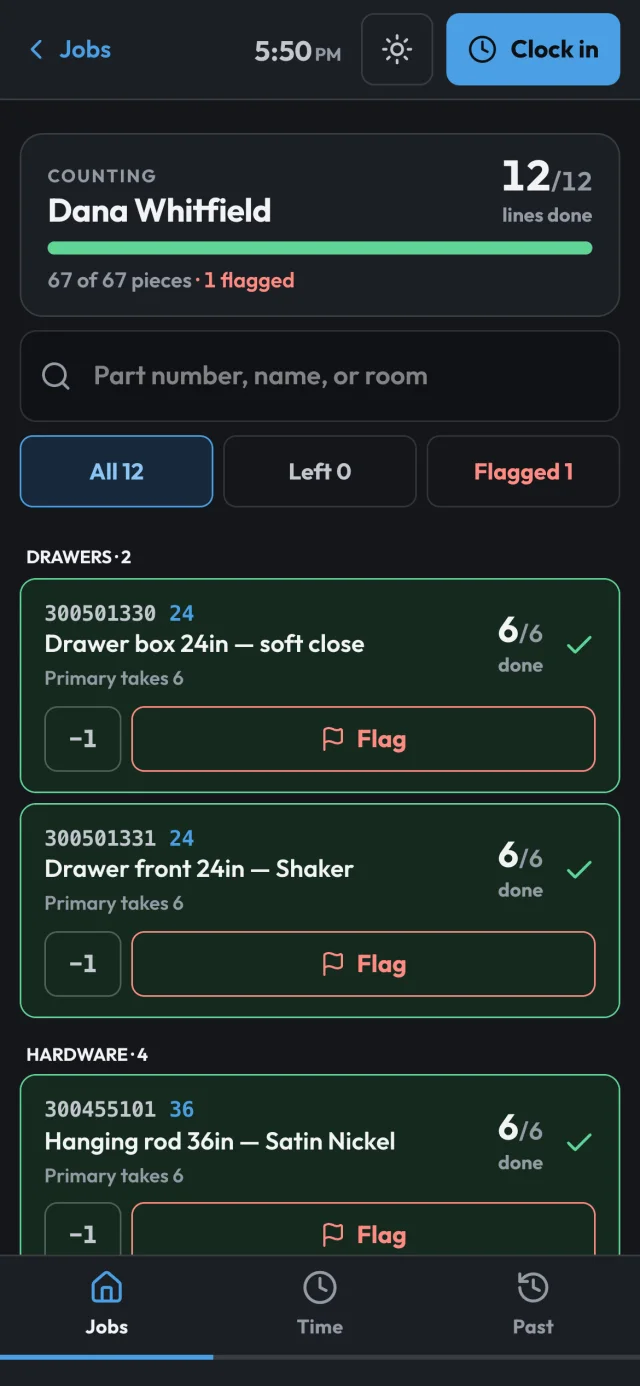
Atlantic Source quotes, contracts and gets paid from a dashboard we built, and their team counts stock from a phone. Storage and closets is simply the example we can show you, and the same work fits any operation that has outgrown its spreadsheets. Real screens, sample data, customer details removed.
What it usually sounds like before we get the call.
None of these are a software problem on their own. Together they are the tax a business pays for running on tools that were never meant to fit it.
The same job is typed in three places
Quoted in one tool, scheduled in another, invoiced in a third, and somebody in the office keeps all three in agreement by hand.
Tomorrow lives in a group chat
The schedule changes at six in the evening and the only record of it is a thread nobody can search next week.
The tool nearly fits
You pay by the seat for a product designed around a different business, and your team works around the parts that do not match.
Nobody can answer a customer quickly
Where a job stands takes three phone calls, because no single place holds the answer.
The numbers arrive late
What last month actually made shows up weeks afterwards, assembled by hand out of spreadsheets.
Growth means another hire in the office
Twice the volume needs another administrator to keep up, rather than a system that absorbs it.
What we build.
Most jobs are some combination of these, in the order that pays for itself fastest. You do not have to buy all of it, and you should not try to.
Scheduling and assignment
The board the office actually works from: what is booked, what moved, what is still unassigned, and what tomorrow looks like.
Apps for people away from a desk
Built for one hand and a patchy signal. Jobs, notes, photos, counts and sign offs from the phone already in a pocket.
Inventory and stock
What is on the shelf, what left the building, what a job consumed, and what needs ordering before its absence stops somebody working.
Proposals, contracts and signatures
A quote that becomes a contract, signed electronically, versioned and stored, with the deposit collected on the same screen.
Invoicing and payments
Invoices, deposits, progress billing and payment plans, wired to Stripe, with card and bank rails handled properly.
Client portals
Your customer signs in and sees their own jobs, documents, invoices and history, instead of emailing to ask.
Dashboards and reporting
The four or five numbers you actually steer by, current as of this morning rather than the end of the quarter.
Integrations and migration
Accounting, email, calendars, payment processors and the spreadsheet everything currently lives in. Moving the history over is part of the work.
How a software build works.
The failure mode for custom software is eighteen months of building in private and a launch nobody wants. We build in slices you can use, and you see it early enough to change it.
We sit with the work
Time spent watching how a job really moves through the business today, including the steps that only exist in one person’s head.
A written scope
What it does, what it deliberately does not do, a fixed price and a date. Nothing starts until you have read it.
The painful part first
We build the piece that costs you the most and put it in front of the people who have to use it early, so the rest is shaped by real use rather than a guess.
Rollout with the people who use it
Training everyone who has to touch it daily, not only whoever signed the proposal. Software nobody adopts has not shipped.
Then it keeps moving
Support, changes and the next piece, on terms agreed up front, so the system grows with the business instead of freezing at launch.
What it is like to own it.
This is the part that separates a system built for your company from a product you rent and hope keeps fitting.
No per seat meter
Hiring three more people does not change what your software costs. It was built for your company, not licensed to it.
Your data stays yours
You can export all of it whenever you like, in a format another system can read. Nothing is held hostage.
Dependable parts, not exotic ones
TypeScript, Postgres and Stripe. Any competent developer can pick this up, which is exactly the point.
It is not resold
What we design around your operation stays yours. It does not reappear inside a competitor’s product next quarter.
It matches the website
Both are drawn in the same system here, so a customer moving from your site into your portal never feels a seam.
Never subcontracted
Built in-house, start to finish. You talk to the people writing the code rather than to a support queue in another time zone.
We run a product of our own.
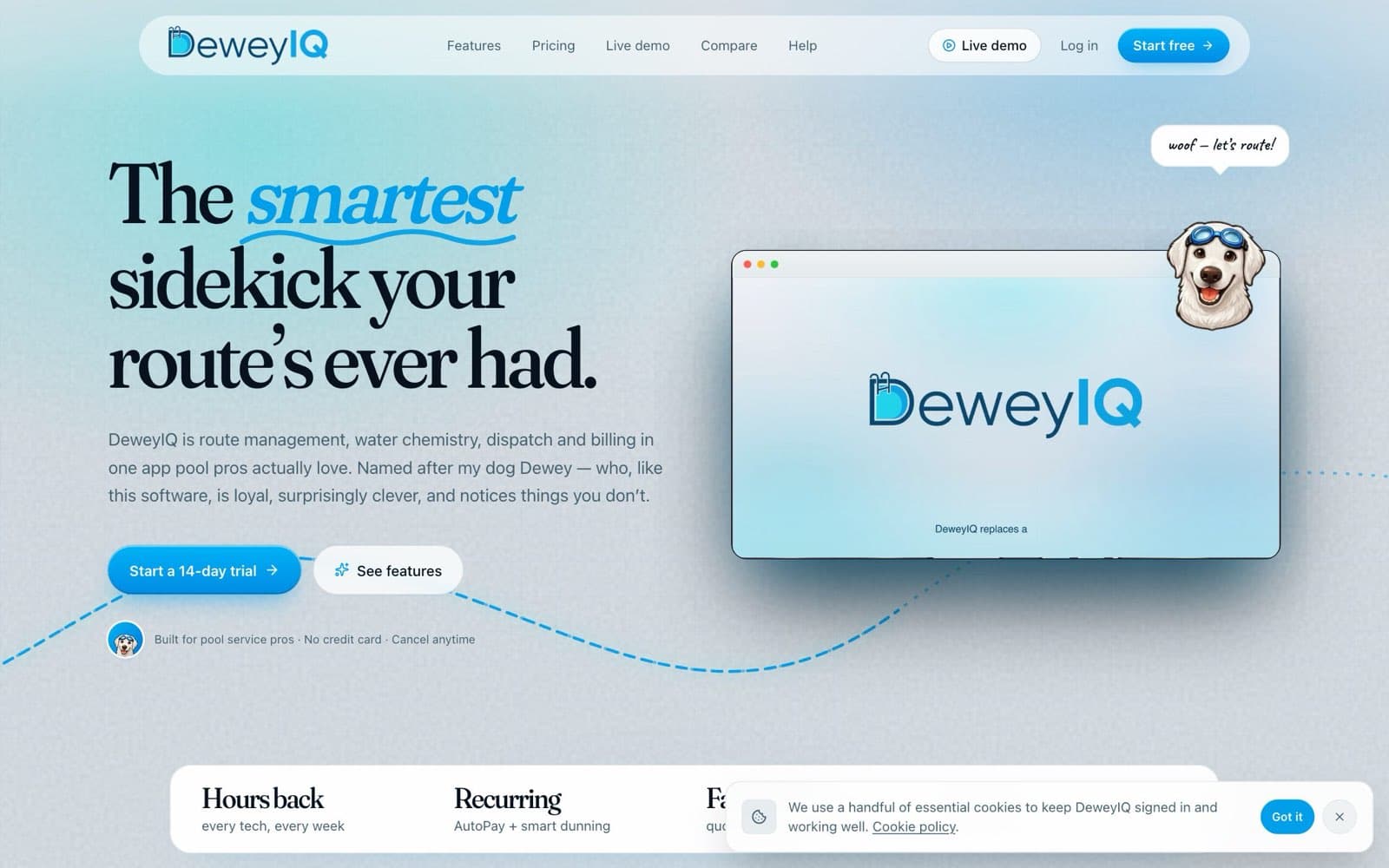
DeweyIQ is ours rather than a client project: routing, water chemistry, dispatch and billing for pool service companies.
It runs on the same stack we build client systems on, which means we live with these decisions daily instead of shipping them and walking away. When we tell you a choice will be painful in year two, it is because we have had that year two.
What it costs, and what comes next.
Software is quoted to the job after a conversation about the work. Half down to begin, the rest at launch, and you see the number before anything starts.